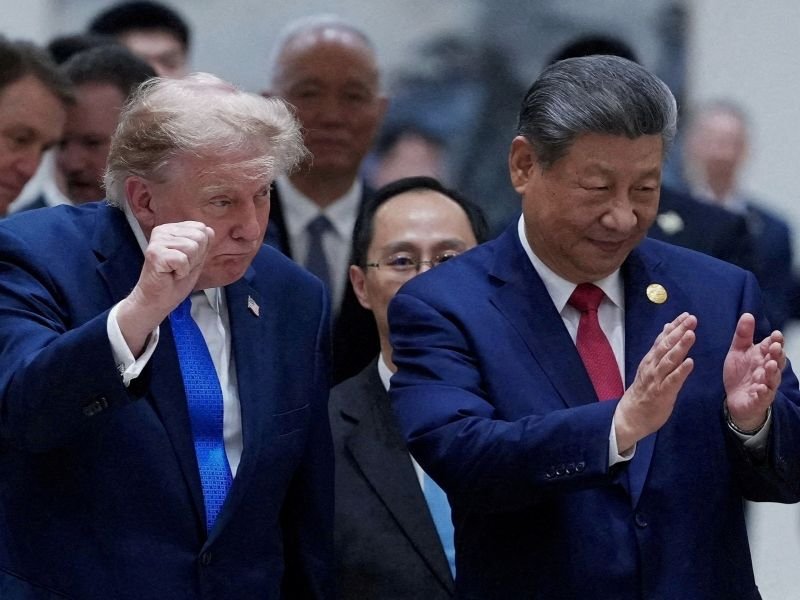
The United States is preparing another round of import tariffs targeting several major trading partners, including China, India, Japan and the European Union, as President Donald Trump continues to pursue a more aggressive approach to international trade.
The proposed measures could affect 14 economies and trading jurisdictions, placing additional pressure on global businesses that depend on international supply chains. The announcement follows a review of foreign trade practices initiated by the US administration earlier this year after the country's Supreme Court ruled against the legal basis of Trump's earlier Liberation Day tariff measures.
The latest proposals are expected to become effective in 2027, subject to the completion of the relevant procedures. They represent another significant development in Washington's efforts to reshape its trade relationships and strengthen domestic manufacturing.
China and Other Asian Economies Face New Trade Pressure
China remains one of the central targets of the latest US trade measures, as economic competition between the world's two largest economies continues across manufacturing, technology and artificial intelligence.
Other Asian economies, including Vietnam, Cambodia, Indonesia, Malaysia, Thailand, South Korea, Taiwan, Singapore, Bangladesh and Japan, are also included in the proposed tariff framework. The European Union and Switzerland are among the other affected trading partners.
The proposed additional rates vary across countries, with some facing higher duties than others. Existing trade arrangements and previously agreed tariff limits may influence the final amounts businesses will have to pay.
For companies exporting products to the American market, the changes could require adjustments to pricing strategies, sourcing arrangements and supply-chain operations.
Washington Defends Its Trade Strategy
The US administration maintains that the new measures are intended to address trade practices it considers unfair and to create better conditions for American manufacturers and workers.
US Trade Representative Jamieson Greer has argued that certain foreign industrial policies have placed American producers at a disadvantage. Washington believes additional import duties could encourage domestic production and create a more balanced trading environment.
President Trump has repeatedly presented tariffs as a central part of his economic strategy, arguing that higher duties on imported goods can encourage companies to manufacture more products within the United States.
However, the policy continues to attract criticism from economists and international trading partners, who warn that higher import costs could create additional pressure on businesses and consumers.
Economists Warn of Possible Price Increases
One of the major concerns surrounding the proposed tariffs is their potential effect on inflation.
When import duties increase, companies bringing goods into the United States may face higher operating costs. Businesses could respond by increasing selling prices, changing suppliers or absorbing some of the additional expenses.
The final impact will depend on the products affected, the availability of alternative suppliers and how much of the additional cost businesses pass on to customers.
Some economists believe the latest measures may have a relatively limited effect because they are partly replacing earlier tariff arrangements rather than introducing an entirely new layer of duties across all imports.
Nevertheless, the additional costs could influence certain industries and contribute to uncertainty among international businesses.
Trade Tensions Between the US and China Continue
The latest announcement comes as Washington and Beijing continue navigating a complicated economic relationship.
Both countries have previously introduced retaliatory trade measures, creating uncertainty for manufacturers, exporters and technology companies operating across their markets.
Competition is also intensifying in strategic industries such as semiconductors, advanced manufacturing and artificial intelligence.
Although recent discussions between President Trump and Chinese President Xi Jinping raised expectations of improved relations, important disagreements remain unresolved.
The existing trade truce is also approaching its January 10 deadline, leaving businesses and investors watching closely for further developments.
European Union Questions the New Measures
The European Commission has expressed concern about the latest US tariff proposals and indicated that it will examine the reasoning behind Washington's decision.
The EU has also highlighted the importance of existing trade arrangements, including the previously agreed 15% tariff limit.
The disagreement highlights the difficulties facing major economies as they attempt to balance domestic economic priorities with international trade commitments.
Further discussions between the two sides could determine how the proposed measures affect transatlantic commercial relations.
Global Businesses Prepare for Another Period of Uncertainty
The proposed US tariffs could have consequences beyond the countries directly targeted by the measures.
International manufacturers may reconsider where they source materials, assemble products and distribute finished goods. Companies with extensive exposure to the American market could also review their supply-chain strategies to manage potential cost increases.
For international investors, the developments add another factor to consider when assessing global economic conditions and business risks.
As the US continues reviewing its trade relationships, attention will remain focused on how the proposed duties are implemented and whether affected countries respond with additional trade measures.
The coming months could prove important for global commerce as governments, manufacturers and investors assess the wider economic consequences of Washington's evolving tariff policy.
END.